
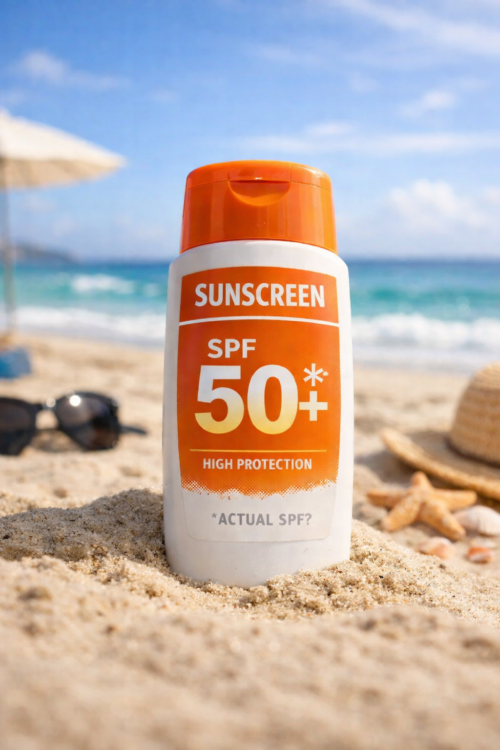
Australia’s SPF Sunscreen Debate: Why In-Vitro Methods and Improved Lab Tools Matter
From: Weneos (HelioScreen)
Posted On: 12 Feb 2026
Australia’s sunscreen market faced heightened scrutiny this year after consumer testing and regulator enquiries found discrepancies between advertised and measured SPF values in several product lines.
Concerns about sunscreen SPF accuracy in Australia have put manufacturer lab methods and formulations under the microscope. The recent Choice Magazine testing (that failed 16 of the 20 sunscreen products) has resurfaced a long-running question in photoprotection science: how do we ensure labelled SPF reflects real-world protection? Regulators, including the TGA (Therapeutic Goods Administration), and independent testers have highlighted the need for robust, repeatable lab practices to ensure labelled protection translates to real performance.
In-Vivo vs In-Vitro: Complementary Methods (not competing)
In-vivo (human volunteer) tests: ISO 24444 is the international standard for in-vivo SPF determination. It remains the legal basis for many labelling decisions but is resource intensive and variable by nature. Under ISO 24444, the in-vivo standard used globally and referenced by the TGA, SPF is determined by exposing human volunteers to controlled UV light and measuring the minimal erythema (skin burning) dose. While it remains the basis for supported SPF claims, it remains susceptible to biological and application variability.
In-vitro (lab instrument) methods: ISO 24443 and related in-vitro procedures measure UV transmittance/absorbance through film samples and are faster, safer and increasingly accepted for formulation development and some regulatory contexts. In-vitro helps screen batches, accelerate R&D and reduce variability
from human testing. The centre of the discussion often comes down to the difference between in-vivo and in-vitro testing.
In parallel, ISO 24443 defines accepted in-vitro methods for assessing UVA protection and spectral absorbance of sunscreen films. In-vitro approaches do not replace human testing, but they provide a highly efficient way for manufacturers and QC labs to screen formulations, monitor batch consistency, and identify outliers well before in-vivo studies are triggered. Regulatory bodies, technical committees and industry groups increasingly recognise that robust in-vitro screening enhances the reliability of both R&D and compliance workflows.
In-Vitro is not a “replacement” in every case but a powerful companion that improves throughput and traceability.
Why Application Methods Matter More Than Most People Think:
One of the largest sources of variability in both SPF and UVA testing lies not in the instrument, but in how the sunscreen is applied before measurement. Manual spreading can differ significantly between operators in thickness, uniformity and film texture, all of which directly affect transmittance.
This is why interest has grown in automated spreading systems, which apply consistent amounts of product at controlled speeds, geometries and pressures. Technical evaluations of automated approaches show they substantially reduce application related variability. A point also highlighted repeatedly in ISO method discussions and laboratory reproducibility studies.
One major source of test-to-test variability is how a sunscreen is spread on the substrate before measurement. Manual spreading introduces operator dependent variation, where automated spreaders remove that variable and produce even, repeatable films for both in-vitro and comparative tests.
Modern Tools Supporting Reliable In-Vitro Testing: UV3000 and SPREADMASTER
A number of laboratories are turning to specialised equipment that aligns with the intent of ISO 24443 while addressing repeatability challenges.
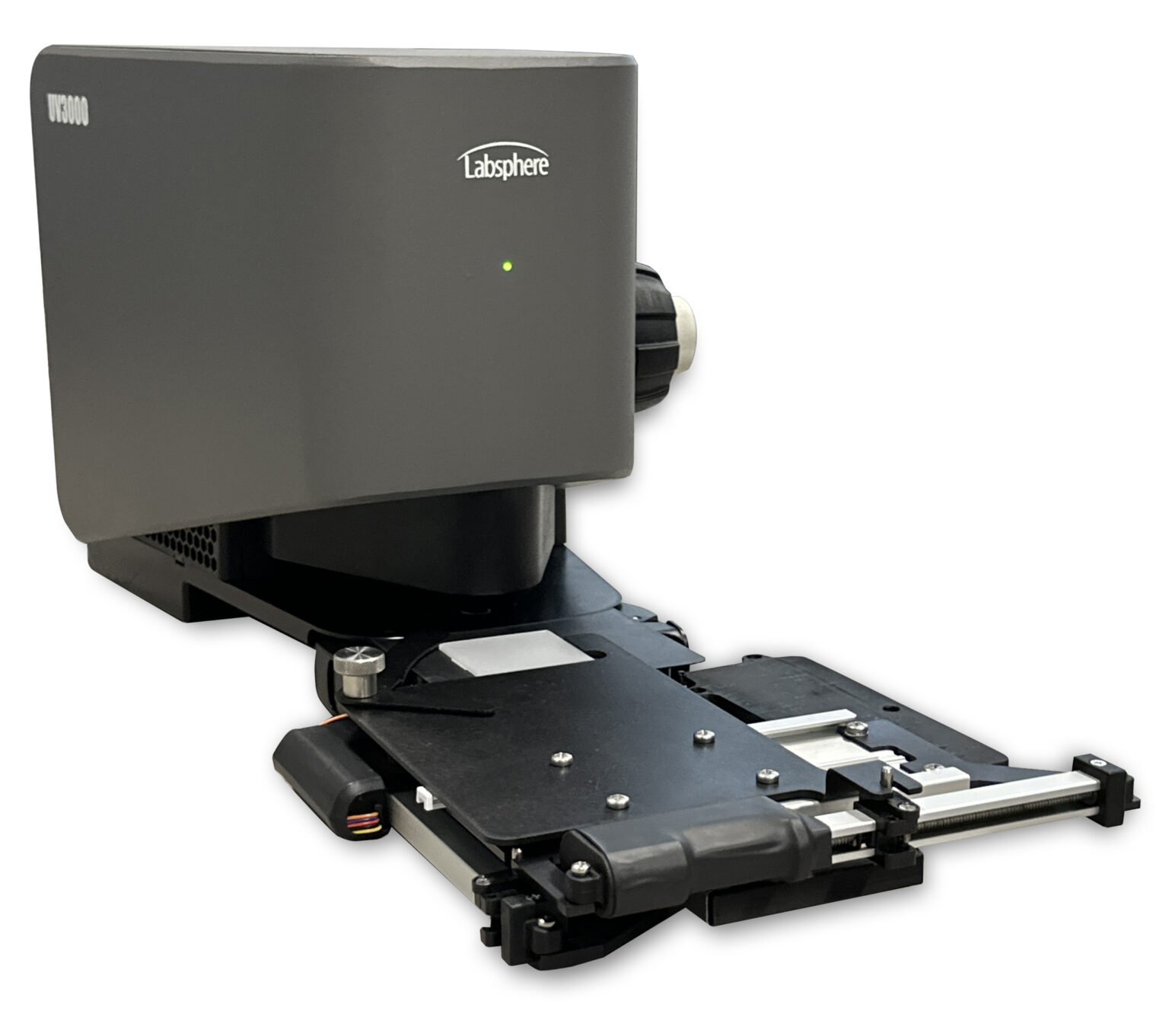
The Labsphere UV3000S, for example, is a dedicated in-vitro UV and HEV transmittance system used internationally for sunscreen screening. According to Labsphere’s technical documentation, the UV3000S uses an integrating sphere based spectrophotometric design to measure diffuse transmittance across the UV and visible range (approximately 290–450 nm). The system incorporates traceable validation standards and automated checking routines. These are features that help laboratories ensure method conformity and manage internal quality control records. Its strength lies in enabling rapid, reproducible scans that provide early indicators of whether a formulation aligns with in-vivo expectations before moving to human testing.
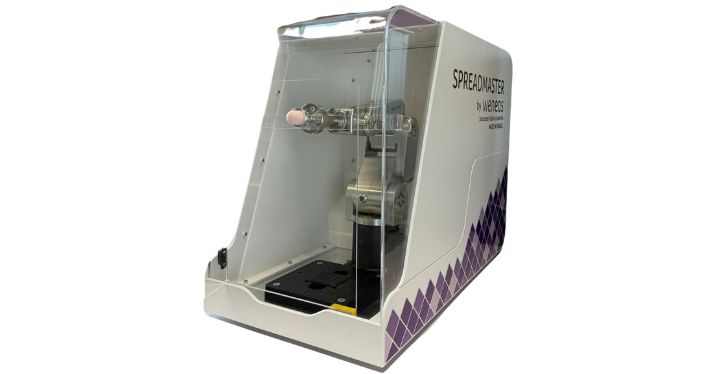
Paired with this, automated spreading systems such as the Weneos SPREADMASTER have emerged as a way to standardise the most variable steps of in-vitro testing. Manufacturer specifications cite ~0.005 mm repeatability of film thickness and controlled spreading dynamics designed specifically for SPF/UVA sample preparation. This type of automation directly addresses the reproducibility concerns raised in both ISO guidance discussions and TGA aligned testing commentary.
Together, these tools allow laboratories to build a workflow that is faster, more repeatable, and easier to audit without overstating claims or bypassing regulatory frameworks.
A Practical Workflow for Today’s SPF Climate
A growing number of labs are adopting a streamlined approach
- Automated film application
Using a robotic spreader (SPREADMASTER) to minimise operator variability and ensure consistent application - Initial batch screening
Receive batch → run in-vitro transmission scan using a transmittance analyser (UV3000S) to quickly identify anomalies - Re-runs
Re-run in-vitro scans to flag deviations for reformulation or in-vivo confirmation submission - Validation and record-keeping
Using instrument calibration kits and method files aligned with ISO 24443 - Processing to in-vivo testing
Only when samples meet internal quality thresholds, reducing unnecessary cost and volunteer exposure
In the current Australian context, where regulators, manufacturers and consumers alike are calling for clarity, this type of evidence first workflow supports stronger decision making without altering regulatory compliance pathways. The SPF discussion in Australia is ultimately a public-health conversation.
Made In

Made In

” Rebuilding trust through rigor, not marketing.
Accuracy matters, transparency matters, and methods matter. “
To restore consumer confidence laboratories seeking to strengthen their sunscreen assessment workflow can explore options offered by Warsash Scientific. Together we can contribute to a testing environment where Australian consumers can rely on the number printed on the label.
To find out more, contact us!